Sunday, October 18, 2015

Effective evaluation of learning

Evaluating student success is a vital part of a teacher's job. Without evaluation, how would they know where their students are in the classroom? There are many types of evaluations that can be useful in an agricultural classroom and laboratory setting. Here are some snapshots of what I learned from my readings this week and how I plan to implement them.

  • Written exam: 
    • This is a test that uses multiple choice questions, short answer, true or false, and essay questions. There are advantages to these types of questions. Multiple choice and true or false questions require students to recall information, but it is easy for students to guess on and create mistakes. Open ended questions require students to know the material well, but it makes grading harder for the teachers because answers can vary greatly. A written exam will work well in the Ag Business Management course I am student teaching next semester. I don't look forward to this type of examination because students just memorize the information instead of learn it. 
  • Performance Assessments:
    • This will be great to use in a shop setting in any class where students are completing hands-on labs. Students are evaluated based off of a rubric. This evaluation has its ups and downs as well. Of course students get to show of their skills, a couple students may be struggling in this area and are afraid of failing in front of the class. I can cause a lot of frustration to the student who is behind. The way I plan to incorporate this in my classroom is through students working in groups, except for welding class. I can pair the students who feel like they struggle with the topic to a student that feels comfortable with the topic. 
  • Portfolio Assessments:
    • Students use all their projects from throughout the course to compile a portfolio that can be used as a final assessment at the end of a course. This shows where the student has grasped or struggled with the topic. I want to implement this in the Ag business management course through the students' projects. Each unit has at least one project and the student will chose 3 of their best for the portfolio. 

Evaluation of students learning lets the teacher know where the student falls in the classroom. It can show what needs more explanation and what can be moved quickly through. It will be fun getting to experiment with the different types of learning assessments to figure out which ones work best and how to properly implement them in the classroom.

Thursday, October 15, 2015

Problem Solving Approach

I have been practicing my teaching techniques for almost seven weeks now! Each week is a new adventure and a new technique to learn. This week I created a problem solving lesson to fit into my greenhouse management unit in the Ag business management course. I was really excited about this lesson because it was an idea I had in mind since the beginning of the year. As a high school student I hated learning skills like this by listening to a lecture. I always wanted to be able to apply them in the classroom. Here are some snapshots from my lesson!


  • Once again, I am having troubles with filler words, rocking back and forth, and playing with the lesson plan in my hand. I am a very fidgety person, so these habits are hard to break. I can practice effective questioning before the lesson to eliminate the crutch of a lesson plan, which will eliminate my fidgeting hands and filler words. 


  • I did a really good job of introducing the topic through personal experiences. To start, I could have shared on of my experiences to warm students up to the idea of sharing. I had to prob some students to get answers. I should practice with the effective questioning because that could have been a problem as well. Having effective questions will allow students to think deeper. 


  • Time for absorbing. I gave the students about a minute to read the scenario to themselves. Instead of telling the students to stand up when they are done, I just asked if everyone was ready. I realized at the end of the last scenario that students didn't get enough time to read through the full scenario.


In the end, I have made tremendous improvements in teaching over these seven weeks. Problem solving can be a boring lesson in the classroom if it isn't confronted with enthusiasm. The students loved how I was excited and started the class with a funny video on customer service fails. They also enjoyed the hands on approach to solving a customer service scenario. Instead of acting out the scene I could have had it typed up and every student would have to work through the situation on their own, but this experience got them thinking on their toes. It was by far one of the best lessons to teach this semester, so far. 


Always remember.........

Wednesday, October 7, 2015

Fall Leadership Conference Reflection

I had an eye opening experience being a facilitator this year at FLC. This is an FFA conference for officer training and first year members. Olivia and I had the Vice President workshop. Here is some key events that I learned from.


  • Not every student will be full engaged. It took us about half of the workshop to get all the students engaged. Maybe we weren't hitting their modality of learning, it was just too early in the morning for them to be mentally awake, or the student simply didn't want to be there. To address this, Olivia would stand next to the person with their phone out. I used the technique of clapping when I couldn't get their attention for the next objective, activity, or direction. One way that I will try to engage students more is to give them a classroom task or try to teach to their modality.


  • We had to change minor details of our lesson plan. Olivia had the brilliant idea of playing Wheel of Fortune to guess the objectives as a transition. About half way through, most students had lost interest in the game. We decided to switch up our teaching method and use transitioning questions instead. I have realized that this type of thing may happen in the classroom as well. It takes thinking on your feet to change up a situation when you see your plan is starting to fall apart. 


  • Time was our biggest enemy! We thought we had timing planned out well for our objectives. When they were put into practice, it only ended up taking less time than we thought. We slowed down the workshop and allowed students more time to think out a Program of Activities. Towards the end we had to cut out one of our leadership activities because we were having so much fun with the other two. Timing will be my enemy when it comes to teaching in a classroom. 


All in all, the experience of writing a long lesson plan and facilitating it to actual FFA members. I learned that planning is super important, but plans are meant to be changed and not set in stone. 


Tuesday, September 29, 2015

How DO you teach?

We are quickly moving through the semester. As I dig further into lesson planning, I learn more about effective questioning and other teaching techniques. Here are some ways that this weeks readings have helped me.


  • Effective questioning goes a long way in the classroom. 
    • Questions are used to assess the knowledge of students, create interest, and develop a relationship between concepts. There are different ways to ask questions depending on the response you want to receive. They can be open ended, divergent, and convergent questions. I have already began using these to create my lesson plans. When I think of a great probing questions for discussion, I write it in the plan in the section that it goes with. It is best to think of these questions before hand.
  • Maximizing student participation
    • Some ways to gain student participation through questioning are to call students by name, ask questions throughout the lesson, randomly select students to answer. Calling students by name gives them a sense of belonging instead of just being a number. Asking probing questions throughout keeps the attention of the students and breaks up the lesson from just lecturing. Randomly choosing those students to answer the questions will prevent intimidation of others. Maximizing student participation will bring more discussion to the table. I plan to use these techniques throughout labs and student teaching. 
  • Experiments as a teaching technique
    • Experiments can be used to solve a problem. They can be individual or classroom conducted. This teaching technique allows students to plan by collecting materials and outlining the procedures. This is a technique I will be using in the classroom when student teaching. I want students to experiment with how amperage affects a weld's strength. Students will also be experimenting in the advanced single cylinder engines course. They will have to tear down engines and figure out why it wouldn't run. 


These readings have brought understanding to me about effective questioning and different teaching techniques. I have outlined just some ways of incorporating this new information to my lessons and cannot wait to use them!

Erin Yoest

Unit Planning

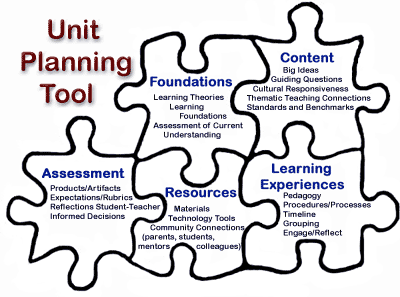
It seems so surreal that we are SIX weeks into the semester! With classes rolling by and assignments becoming complete, there is still a lot of planning to do. Planning will help the  classroom run smoothly. One of our assignments in AEE 412 is to create the unit plans for the units we are teaching. The one I created for peer review was on Embryology. Here are a couple points I learned while creating my unit plan. 

  1. The main goal of the unit has to be clear. I thought long and hard about this unit. I began with the end in mind. I portrayed the goal of the unit clearly throughout the plan. The goal of my unit is that students learn the reproductive system of a chicken, parts of an egg, and the stages of embryonic development. They will keep accurate records in AET of the hatching process and create a financial goal. 
  2. Peer feedback was important to me. I had received the feedback within a reasonable time period. They had good feedback. I adjusted unit plan with the feedback in mind. 
  3. I edited my unit goals to not contradict with the unit rationale. Earlier that week, we learned to write objectives. I rewrote my objectives. There was some contradiction in the order I had placed my classes. I looked from a student perspective onto the plan and decided switch teaching the parts of an egg after how to candle an egg. I noticed that students would need to know the parts of an egg before they were to candle it. The last change I made was in the assessment section. I did not fully identify how I was assessing the students. I added in point values for each assignment as well as how I was assessing them. 

This was the first unit plan I had created, so I knew it was going to look rough. I learned that it is super important to write a plan with the end in mind. The feedback was really important in creating this plan. Without them, I would not have pointed out some mistakes. Thankfully, they were only minor changes that were simple to fix.
Erin Yoest

Sunday, September 27, 2015

How can we improve education?

Over the weekend we were asked to watch a couple TED talks and read a couple articles on inspiring ideas. I am sitting here thinking, "what am I really passionate about that needs to change?" There are so many great ideas out there about what needs changed in the educational world. Well, here is my idea...


Every single year teachers hear the same phrases about standardized testing. Don't teach for the test, teach for your students. Teachers think of this constantly in their classroom, but how can they teach for their students when they have to pass a state standardized test that isn't based on what you actually need for the real world? Don't get me wrong, these tests are an important part of education, but do they really show the true value a student has? We could think of it this way. High school seniors are graduating with the knowledge of trigonometry, but not how to properly balance a checkbook. They know the importance of the government, but do they know how to vote? Do they really know how to put the facts together and vote for who they think should be in office to run our country?

Students lose their creativity and sense of being in the school system today. Teachers are shoving this knowledge into their brains just to pass an exam. An exam that doesn't have any value to students once they graduate. Students are loosing precious time on learning

Students know how to do all the technical math problems and writing out of high school. But think of it this way...

How different would our world be today if kids graduated from high school learning to be an informed citizen instead of just learning to pass a test?

Friday, September 25, 2015

Teaching Lab #3

I decided to create my interest approach on shop safety. I wanted to incorporate an E-Moment into my interest approach and wanted it to be kinesthetic. Student's don't get to move around much when discussing shop safety. I had students collect items from around the room. These items were a mixture of safety PPE and unsafe clothing.


Here are some points from throughout the lesson.


  1. I need to be careful for filler words, especially "ummm." I can continue to practice or think about what I am going to say to fix this issue. 
  2. I caught the student's who were using technology and talking out right away, but I feel like I could have handled the situation better. Next time, when someone is using their phone during an individual project, I could say, "Hey Stacia! Since it looks like you are finished with the assignment, can you look up three points on welding safety that we have not talked about yet?"
  3. When I was teaching through my interest approach, I noticed that picking students' brains is very important.Integrating open ended questions in your lesson will open new doors to a student's learning. Choosing those questions is important as well because you want the questions to lead somewhere. By clicking here you can read about 5 powerful questions that when used effectively can create and engaged classroom. 

As the days go on, I improve with my planning and teaching. The most important part is that I have fun doing it.

Remember, "The art and science of asking questions is the source of all knowledge." -Thomas Berger